
作者:辛纯辛道
来源:原创
时间:2026-08-26
阅读:877535 次
余罪
2,200-year-old leaf-wrapped grain bundles found in Chinese tomb may be ancient precursor to ‘zongzi’_我的网站

A |
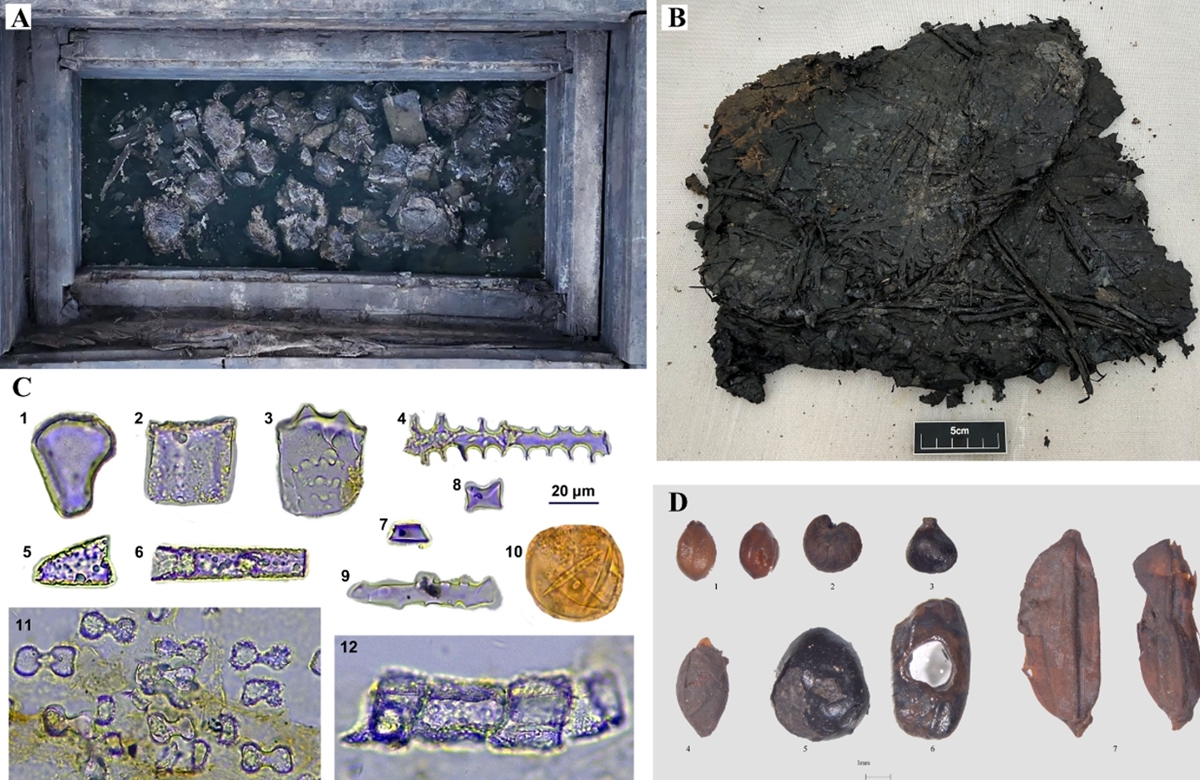
In March 2024, archaeologists from the National Center for Archaeology excavated a large number of well-preserved, waterlogged plant bundles from the tomb's outer coffin chamber. On-site, the plant bundles could be seen tightly wrapped in broad leaves and tied with plant-fiber cords.
A team of researchers led by the National Center for Archaeology, IVPP, and the Chinese Academy of Social Sciences examined 12 of the bundles and found that the wrapping leaves came from oak trees, while the cords were made from grasses.
The bundles mainly contained rice, broomcorn millet, foxtail millet, and cereal seeds, most of which were still in their husks and mixed with inflorescence material. Small amounts of peppercorn, mallow and rice-field weed seeds were also found.
The fact that the bundles were found in a tomb and mainly contained grains still in their husks suggests they were not everyday food, but offerings intended for funerary rituals. "This might reflect a Warring States-era belief that grains served as wealth for the dead in the underworld," Ge Yong, an associate researcher at the IVPP and the study's corresponding author, told the Global Times.
A Qin Dynasty (221BC-206BC) text describes a belief that "soybeans were gold and millet was money" for the dead, indicating that grains held symbolic significance in funerary culture. "The bundles therefore appear to have been ritual offerings prepared for the deceased," Ge said, "not food for the living."
The physical structure of the bundles also resembles that of zongzi, with grains wrapped in leaves and tightly secured with plant-fiber cords. "Similar practices of wrapping grains for burial have also been found elsewhere within the Chu cultural sphere," Ge said, "such as at the Chengyangcheng Site."
At the Chengyangcheng archaeological site in Henan Province, rice and broomcorn millet were also discovered wrapped in oak leaves. "An interesting fact is that we can still find zongzi wrapped with the same oak leaves now in regions related to the Chu cultural sphere."
"The findings suggest that wrapping grains as funerary offerings was a relatively common practice in the Chu state during the Warring States period," Ge said. "And this practice may have been an early form of the zongzi later associated with the legend of Qu Yuan."
These plant bundles share a structure similar to that of modern zongzi and to those described in legends and folklore. This might reflect how, through cultural exchange and heritage, these 2,200-year-old plant bundles likely evolved over centuries, shifting from sacrificial offerings to food, said Ge.
As diverse regional populations adapted the practice, it eventually transformed into the well-known Dragon Boat Festival tradition of eating zongzi. Thus, this structural resemblance might suggest a potential historical lineage; however, experts stressed that the Wuwangdun bundles should not simply be labelled as ancient zongzi.
"We can't define these plant bundles as the earliest zongzi, but rather, we can confirm that by 2,200 years ago at the latest, the Chu region had established a tradition of using this specific form of plant bundles for funeral rites. And this tradition could be a possible origin or precursor of the well-known zongzi," said Ge.
He added that the discovery provides critical physical evidence to explore the origins of zongzi and its cultural heritage.
。 8月26日讯 近日NBA名宿拜伦·斯科特和前NBA球员阿里扎、丹尼·格林录制了《Byron Scott's Fast Break》播客,在最新更新的一期里,他们谈到科比的相关话题。主持人:格林,这种心态在多大程度上影响了你们这一代球员?格林:影响非常大。从远处观察他的行事作风,听他的采访,你就能感受到。一大半的挑战在于他总是亲力亲为。凌晨三四点他就已经在那儿了。他谈到一天要训练三次。他说如果你从凌晨三点开始,你就能完成三次训练。训练完睡个觉,早上六七点再练一次,然后十二点再练一次,这样你一天就能练四次。大多数人光听听这些废话就觉得累了。一天练四次?不,你还得有自己的生活。没有多少人能有这般奉献精神。大家都在谈论詹姆斯如何保养身体和训练,但我不知道他是否像科比那样每天练四次。詹姆斯确实非常努力,这也是他能打到第24个赛季的原因。但我从未见过其他人像科比那样训练,这就是他的特别之处。
Current article:http://6geqwds.shouyouxumianpouluanteng.shop/t2tkijq/20260826/4065.html
Published on:16:21:22


